

(Dec. 8, 2015) I am writing about a very private topic — mental illness. For centuries it carried great shame, and it still carries a deep stigma. I know it intimately. My son has suffered from schizophrenia for a quarter century. At his core he is intelligent, exceptionally creative and a giving and loving human being, yet the inner voices prevent him from functioning in society.
 As his mother, I have suffered alongside him for 25 years. His present means of support comes from his brother and me. Because of a federal grant, he’s been forced out of his housing and is sometimes called an “in-betweener,” left to fend for himself.
It is easy to make judgments, to write someone off as crazy and turn away from lending supportive action. Perhaps because it is frightening to look at these reflections, fearing our own potential for extremes of thoughts, behavior, beliefs or actions we pretend it doesn’t exist, doesn’t affect “me.” Yet in New Mexico, 1 in 5 are touched in some way by mental illness.
Did you know that starting in the 1980s, mental hospitals were closed, services cut and thousands were left unaccounted for? Withdrawal of support leads to a chain of events: mentally ill on the streets with no services, police expected to deal with their actions — often as criminal behavior — shootings, outcry of police brutality, national news coverage. There is also the expensive problem of incarcerating thousands of the mentally ill rather than treating them. Thousands more are warehoused in nursing homes or group homes, which are understaffed by workers with few qualifications.
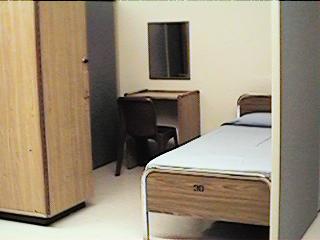
After many hospitalizations, my son was sent to live in a shabby group home for men with no staff on-site. It felt barren; there was little nourishing food. Anything of value that my son owned was stolen. Rent and food was $500 a month, the majority of his disability money.
Eventually he found Casa Milagro in Santa Fe, an interactive community with caring staff. Medication was monitored and he attended therapy; he contributed with cooking and cleaning chores. There were regular meetings with staff and residents. My son did well and became high-functioning. He had to leave Casa Milagro because he was not initially homeless.
Ironically, their federal grant, called Continuum of Care, designed to alleviate homelessness, may force those like my son who are turned out to become homeless, without supported housing and consistent case management, even proper medical care.
My son has moved to a small room, where he lives alone, without medication monitoring or other support. I fear the pattern of cycling hospitalizations or police involvement. The mentally ill are not going away. Recurring hospitalization and incarceration as a strategy make no economic sense. Supported housing and supervised medical care is more effective, more humane and much, much less costly.
Become proactive to help break the chains of ignorance, neglect and abuse. Contact both your New Mexico state and federal legislators and make your voice count to reduce hospitalizations. Patients require continuing therapy and treatment once released to avoid costly recidivism and personal trauma.
LINSAY LOCKE
JEMEZ SPRINGS, NEW MEXICO
Read the entire column here.
To comment, visit our Facebook page.
Visit our blog archive to read all our recent posts.