

(Nov.16, 2015) Last Thursday marked one year since the death of Tanisha Anderson, a 37-year-old mother diagnosed with bipolar disorder, who was killed during an altercation with Cleveland police (“Vigil marks anniversary of Tanisha Anderson’s fatal encounter with Cleveland police,” Cleveland.com, Nov. 12).
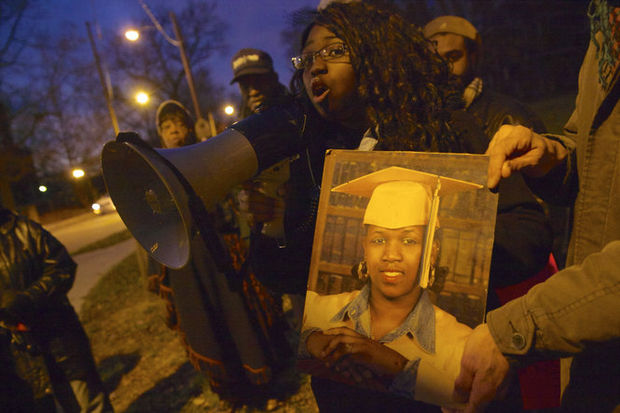 Tanisha Anderson hasn't been forgotten. A vigil held on the anniversary of her death brought 30 people huddled together in the cold—near the neighborhood home where officers fatally restrained Anderson—to keep her memory alive.
"She was an extremely loving person and an extremely giving person. She just wanted to please," said Jasmine Johnson, Anderson's sister.
"Losing her to a senseless act of violence...blows my mind every day," Johnson said. "There are so many things [the police] could have done to avoid this."
Officers responded to Tanisha Anderson's home last November after her family called 911 for help.
Anderson was behaving erratically due to untreated severe bipolar disorder. The officers who arrived at the home were supposed to take Anderson to the hospital, where she would undergo a mental health evaluation. But, as they escorted Anderson to the back of the police cruiser, she became afraid and refused to get inside.
According to police reports, Anderson struggled with the officers and kicked at them, and then suddenly went limp. However, Anderson's brother said he watched as one of the officers used a takedown move to put her face down on the pavement.
The Cuyahoga County medical examiner ruled that Anderson was killed when police restrained her in a prone position. Heart disease and bipolar disorder were also cited as factors that contributed to her death.
The tragic encounter occurred just weeks before the U.S. Department of Justice released the results of its investigation that found people with mental illness are subject to cruel and unnecessary force at the hands of poorly trained Cleveland law enforcement.
The city and the Justice Department have signed a deal that aims to improve how officers respond to mental health crises, among other department overhauls.
The memorandum of understanding with the Alcohol, Drug Addiction and Mental Health Services Board of Cuyahoga County outlines reforms including the creation of a Mental Health Response Advisory Committee that will help police develop relationships and build support among the community and mental health providers.
The memorandum also mandates that all officers, call-takers and dispatchers receive crisis intervention training. Committee members will conduct annual reviews of the police department's crisis intervention program to determine its effectiveness, according to the memorandum.
It remains to be seen what, if any, impact the memorandum will have upon the interaction between law enforcement and people with severe mental illness in Ohio.
However, one thing is for certain: Tanisha Anderson’s death was and remains a tragedy, and it must never be forgotten.
To comment, visit our Facebook page.