

(Jan. 12, 2015) A man who was shot and killed last week at an Ohio airport had a history of mental illness and was untreated at the time of the deadly encounter with police (“Port Columbus officers involved in fatal shooting are identified,” the Columbus Dispatch, Jan. 8).
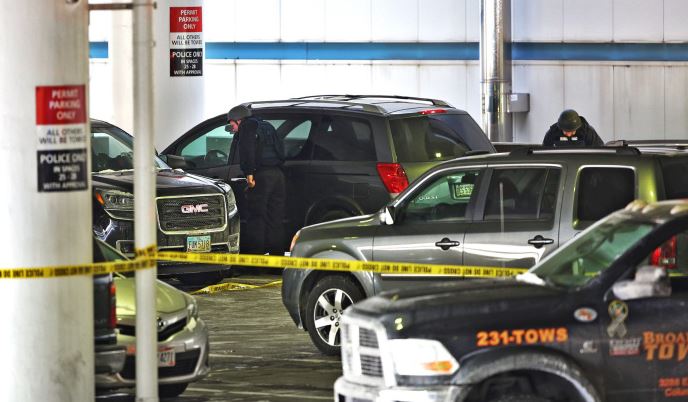 Hashim Hanif Ibn Abdul-Rasheed, who arrived at the Port Columbus airport armed with knives, had been in and out of treatment centers for nearly fifteen years after being convicted of assault in 2001.
Following his conviction, Abdul-Rasheed remained under court supervision for more than a decade, transitioning from an inpatient unit to a different behavioral health care facility, then a group home with full-time supervision in 2002, semi-supervised housing and eventually independent living, according to court records. His outpatient commitment ended in 2012.
Then, nearly three years after being released from court supervision Abdul-Rasheed tried to use a woman’s ID to buy a ticket at Port Columbus airport before returning to his illegally parked car, where he confronted airport police.
An officer fired at Abdul-Rasheed after he lunged at him with a knife, then a second officer fired after Abdul-Rasheed got up and headed back into the terminal, according to Columbus police.
He appeared to do everything he could to get himself shot, said Jim Shriner, a tow-truck driver who witnessed the event at the airport. Abdul-Rasheed “left the officers with no option but to shoot,” Shriner said.
“I don’t know how he thought it was going to end,” said Shriner. “I feel horrible that somebody lost their life. At the same time, the officer tells you to stop, it’s time to stop.”
Abdul-Rasheed’s death reflects one of the tragic and deadly consequences of leaving severe mental illness untreated. A Treatment Advocacy Center study entitled “Justifiable Homicides: What is the Role of Mental Illness?,” found that untreated serious mental illness is an increasing factor in officer-involved homicides.
“Justifiable homicides involving people with untreated mental illness are a symptom of our failed mental illness treatment system,” said Doris A. Fuller, executive director. “Fewer officers would come under attack and fewer people with mental illness would die from these encounters if more people with mental illness were getting the treatment they need when they need it.”
To comment, visit our Facebook page.
Visit our blog archive to read all our recent posts.