

(March 20, 2014) Conditions for the inmates and staff at New York City’s Rikers Island jail complex have reached noteworthy low points this year, and mental illness has complicated the situation considerably. (“Rikers island struggles with a surge in violence and mental Illness,” New York Times, Mar. 18).
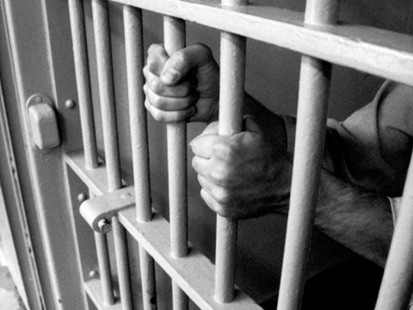 “A jail like Rikers Island has a subculture of violence,” said Dr. James Gillian, an author of a report on conditions in Rikers. “Yet its particularly vulnerable mentally ill prisoners are still often placed in solitary confinement, even juveniles.”
According to daily incident reports from the complex, in the last three months, at least 12 inmates have been victims of slashing or stabbings, most of which have occurred on their faces or necks, since. Correction officers have also endured a variety of other injuries including lacerations, concussions, eardrum punctures and fractures.
This violence has raised alarm for those who oversee the institution, including officials, union leaders and prisoners’ advocates.
Rikers is one of the country’s largest jail complexes. The proportion of inmates diagnosed with mental illnesses has grown from 20 percent to 40 percent in eight years, the New York Correction Department says. And this influx of mentally ill prisoners poses a huge challenge to both the facility and to the city.
“Right now, jails and prisons are grappling with a population they are not prepared to deal with,” said Dr. Bandy X. Lee, a professor of psychiatry at Yale University specializing in violence at jails and prisons. “It is not so much a fault on the part of the correction system,” Lee continued. “They are simply not equipped and have not been able to adjust quickly enough.”
The result of this lack of preparation is that mentally ill prisoners often suffer even more than their peers, being assigned by frustrated and underequipped guards to isolation and sometimes to abusive therapeutic units even when they do receive treatment while incarcerated.
Unfortunately, as Rikers knows, the problem of overrepresentation of the mentally ill among inmates, and the neglect and abuse that often result from ill-equipped facilities and staff, is not new. Not only does this problem call for safeguards within jails and prisons, but also for efforts to divert the mentally ill to treatment rather than to incarceration.
To comment, visit our Facebook page.
Visit our blog archive to read all our recent posts.