

Who Can Initiate Treatment – Updated and Centrally Located
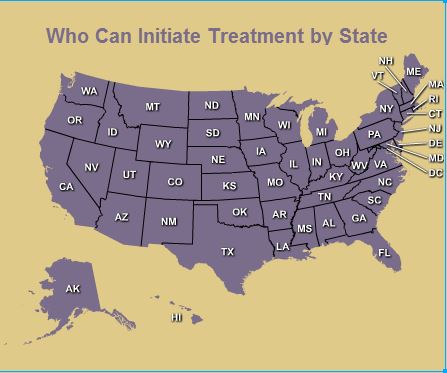 (March 26, 2013) Voluntary treatment is the ideal path to treatment for a severe mental illness, but when individuals are in acute psychiatric crisis and too sick to recognize they are ill or are incapable of making a self-interested medical decision, involuntary treatment is sometimes warranted.
Court-ordered treatment options exist in every state to provide court-ordered intervention for individuals who meet strict legal criteria. But who can petition the court for assisted treatment varies from state to state, sometimes dramatically. In some states, such as Washington, only a mental-health professional can petition a court. In others, like Colorado, virtually anyone can ask the court to consider whether someone needs emergency care.
To provide families, professionals and the public with essential information about who may begin proceedings leading to court-ordered treatment, the Treatment Advocacy Center has updated “Initiating Court-Ordered Assisted Treatment: Inpatient, Outpatient and Emergency Hospitalizations States by State,” a centralized state-by-state resource.
The guide is published in the Civil Commitment Laws and Standards section of our website, where a print-friendly version is also available.
In a mental health crisis, the first priority is always to protect loved ones and others from dangerous behaviors that may result from untreated or uncontrolled mental illness. To do that, it is essential for family members to know the standards and criteria that are used to determine when intervention may be ordered.
Providing public education about court-ordered treatment options is one of the ways the Treatment Advocacy Center reduces barriers to treatment and promotes recovery from psychiatric crisis.