

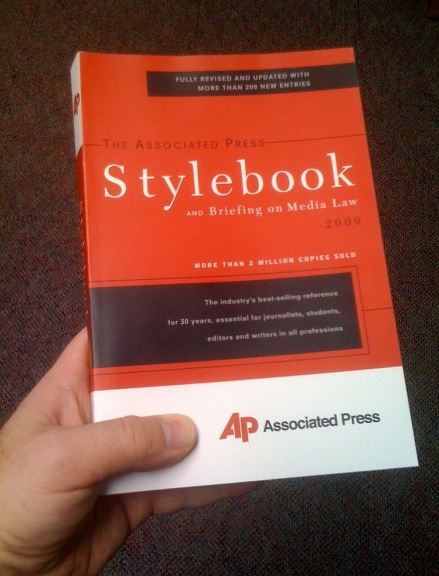
(Mar. 8, 2013) Yesterday, the Associated Press included rules on mental illness in the new edition of the AP Stylebook, the writers' guide used throughout the industry.
 “It is the right time to address how journalists handle questions of mental illness in coverage,” said AP Senior Vice President and Executive Editor Kathleen Carroll. “This isn’t only a question of which words one uses to describe a person’s illness. There are important journalistic questions, too.”
Now, mental health advocates, looking forward, can cite the AP Stylebook as an authority in getting wayward editors and reporters to change their ways in how they report about mental illness.
Founded in 1846, AP is a global news network whose reporting is seen or heard by more than half the world's population.
The new rules include:
* Mental illness is a general condition. Specific disorders are types of mental illness and should be used whenever possible. Do not describe an individual as mentally ill unless it is clearly pertinent to a story and the diagnosis is properly sourced.
* Don't rely on hearsay or speculate on a diagnosis....Provide examples of symptoms.
* Do not use derogatory terms, such as insane, crazy/crazed, nuts or deranged, unless they are part of a quotation that is essential to the story.
* Wherever possible, rely on people with mental illness to talk about their own diagnoses.
* Avoid using mental health terms to describe non-health issues. Don't say that an awards show, for example, was schizophrenic.
Please send a message of thanks to AP at This e-mail address is being protected from spambots. You need JavaScript enabled to view it . Please share the new rules with editors and reporters in your community.
To comment, visit our Facebook page.
Visit our blog archive to read all our recent posts.